
The Tools I Use in Social Skills Coaching
When you walk into my coaching space, you'll notice right away—it's not a typical office. That’s intentional. Every element in the environment is chosen with purpose to support how you learn best.
Social skills are not just ideas. They are experienced through body language, tone, presence, timing, and interaction. Because everyone learns differently—some by seeing, some by hearing, some by doing—I use a multisensory, hands-on approach that makes social learning concrete, visual, and practical.
Therapy Dog for Social Awareness & Perspective-Taking
My certified therapy dog is more than a comforting presence. He is a gentle reminder to notice who and what is around you—an essential part of social awareness. His calm energy helps clients practice perspective-taking, environmental awareness, and “sharing space” with another being.
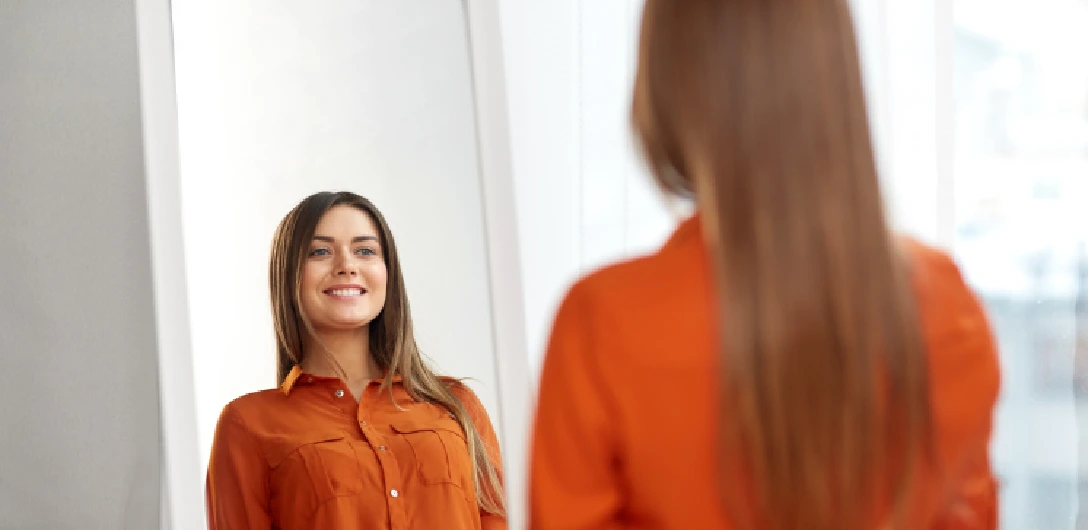
Mirrors for Practicing Nonverbal Communication
Multiple mirrors are placed throughout the room so clients can observe:
- ● body language
- ● posture
- ● facial expressions
- ● nonverbal gestures and movements
This visual feedback helps clients become more aware of how they present themselves—and how others may interpret those cues.
Voice Recording for Tone, Volume & Speed Awareness
Many people are unaware of how they sound to others.
By recording short interactions and reviewing them together, clients gain insight into:
- ● tone
- ● volume
- ● pacing
This helps them make small but meaningful adjustments that improve how they communicate.
Silent Video Clips for Decoding Nonverbal Language
We often watch short video clips with the sound turned off.
This allows clients to focus exclusively on:
- ● facial expressions
- ● gestures
- ● body posture
- ● eye contact
- ● nonverbal messages sent and received
This strengthens the ability to read and interpret social cues accurately.
Hula Hoop for Understanding Personal & Shared Space
Personal space can be hard to understand through explanation alone.
A hula hoop offers a concrete visual and physical boundary to explore:
- ● “my space”
- ● “your space”
- ● how close is too close
- ● what feels respectful in different social situations
Clients physically experience the abstract concept of boundaries.
Visual & Sand Timers for Time Awareness
Time is invisible—so we make it visible.
Using sand timers or digital countdown timers helps clients:
- ● understand how long tasks take
- ● stay focused
- ● transition more smoothly
- ● feel less rushed or unsure
Seeing time pass improves predictability and emotional regulation.
Whiteboard & Custom Visuals for Building Social Concepts
Many social ideas become clearer when they’re visual.
I use:
- ● diagrams
- ● custom posters
- ● step-by-step whiteboard illustrations
These visuals show how the details of a social concept connect to the “big idea,” making learning easier to understand and apply.
Role-Play & Movement-Based Activities
Talking and listening are only part of the process.
We also:
- ● role-play real-life scenarios
- ● practice problem-solving
- ● use movement-based games
- ● rehearse conversations and social choices
This hands-on approach makes learning active rather than abstract.
Matching Tools to Your Learning Style
At Social Skills Coaching (SSC), your learning style matters.
Some people learn best by:
- ● listening
- ● watching
- ● touching
- ● doing
- ● moving
I adjust every session to match how you naturally learn.
This ensures the tools we use support your growth, confidence, and success in real-world social situations.
The Goal
All of these tools help build the skills needed to navigate our shared social world—skills that support connection, confidence, and the ability to “fit in” with comfort and authenticity.
COMING SOON
Virtual Reality (VR) Social Skills Coaching with Floreo
At SCC, we use the latest technology to make social learning more effective and more accessible. One of the most exciting tools we offer is Floreo, a research-based Virtual Reality (VR) program designed specifically for neurodiverse learners. Floreo is the first VR system for autism therapy to receive the FDA’s Accelerated Approval, marking a major breakthrough in the field.
Why Use VR for Social Skills?
Many social situations are difficult to practice in a traditional office setting. VR allows us to recreate real-world scenarios in a way that feels safe, predictable, and low-pressure.
With VR, clients can practice skills such as:
- ● Starting conversations
- ● Recognizing social cues
- ● Understanding teasing vs. bullying
- ● Navigating busy environments like cafeterias or classrooms
- ● Crossing streets or managing community spaces
- ● Interacting with peers, teachers, coworkers, or community helpers
These experiences would be hard—or sometimes impossible—to set up in real life. VR makes them repeatable, controlled, and accessible.
A Safe and Supportive Learning Environment
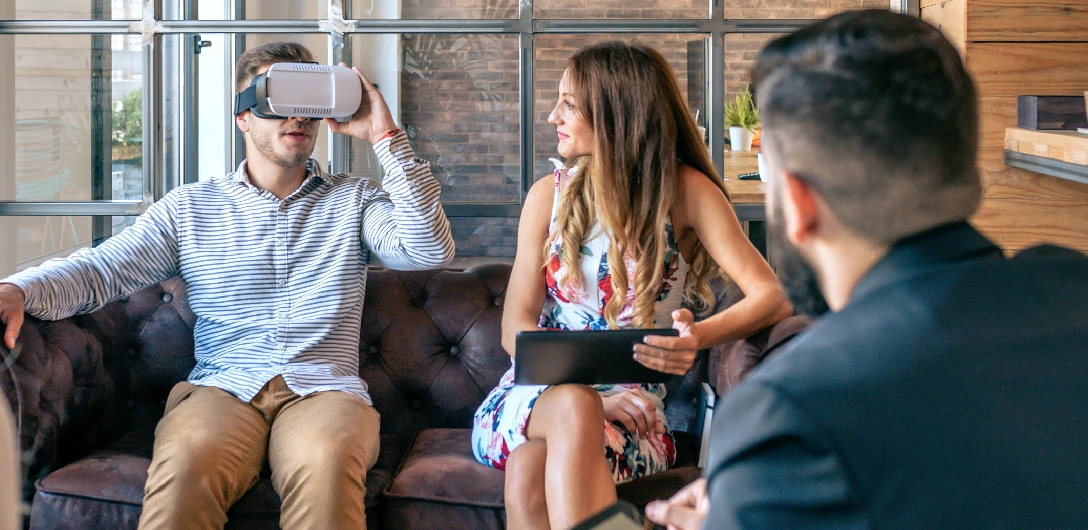
Floreo creates a virtual learning environment where clients can practice communication and social behaviors at their own pace. The headset allows individuals to feel immersed in a realistic scene, while still staying in a calm and comfortable therapy space.
Clients benefit from:
- ● A low-risk practice environment
- ● The ability to repeat lessons as many times as needed
- ● Immediate feedback and coaching
- ● Reduced anxiety when compared to real-world first attempts
Because everything happens in a predictable virtual world, learners can build confidence before using new skills in real life.
How It Works in Coaching Sessions
- ● Clients wear a designated VR headset.
- ● The coach selects customized lessons designed for the client’s needs./li>
- ● With just a few clicks, clients enter an immersive scene and begin practicing.
- ● The coach observes, guides, and gives support throughout the experience.
- ● Skills learned in VR are then transferred to everyday settings.
Every lesson is grounded in evidence-based techniques and developed in collaboration with clinicians, educators, and researchers.
Real-World Impact
Floreo is not just a virtual tool — it’s a powerful bridge between practice and real-life success. Clients learn new skills in a space that feels safe and manageable, and then gradually apply what they’ve learned in school, at work, and in the community.
VR offers:
- ● A controlled environment
- ● Real-world application
- ● Customizable learning pathways
- ● A fun, engaging approach that motivates practice
Designed for Neurodiverse Learners
Floreo was created specifically for individuals who benefit from:
- ● Visual, structured learning
- ● Repetition and consistency
- ● Reduced sensory load
- ● Gradual exposure to challenging situations
- ● Step-by-step skill building
SCC uses VR as a virtual therapy modality with real-world results, helping clients build confidence, communication skills, and independence.